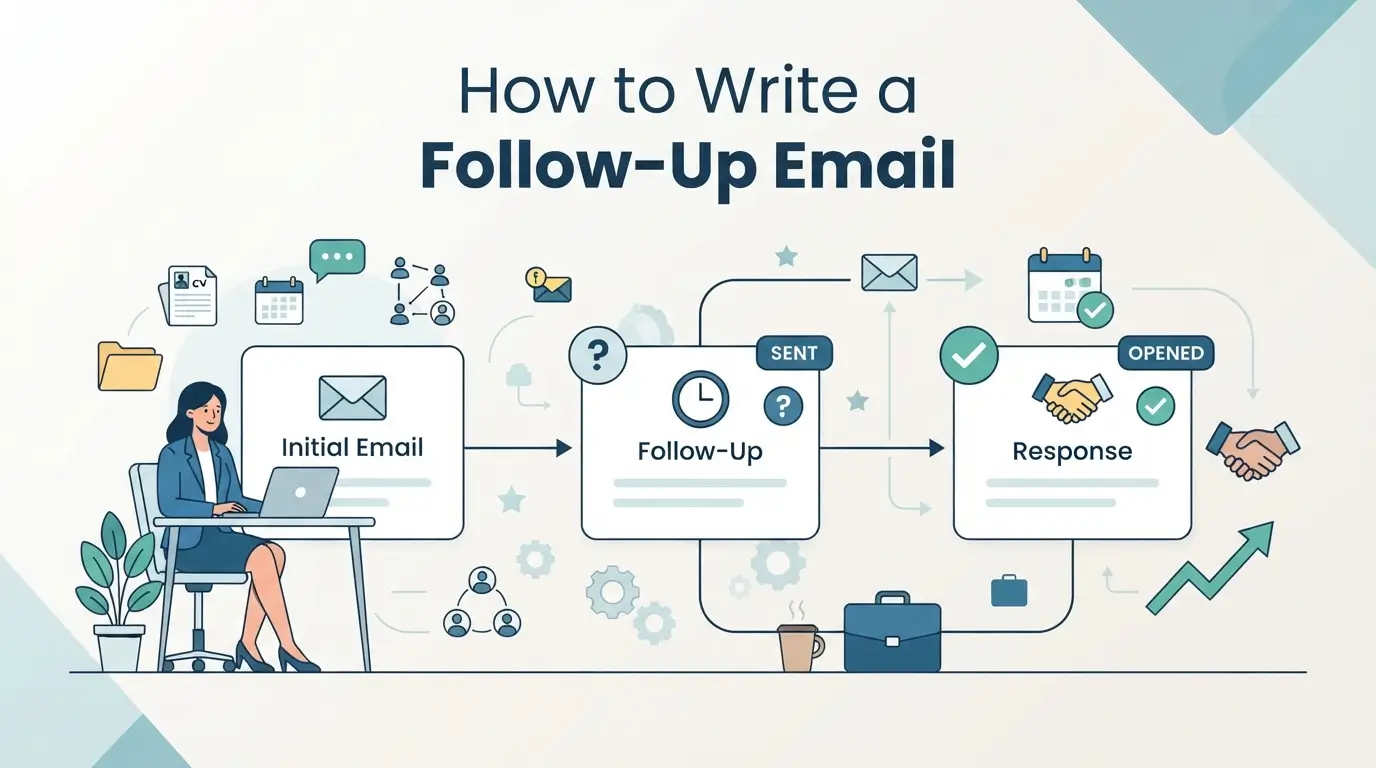
Ever sent an email that actually mattered and then just... waited? Refreshing your inbox, wondering if it landed in a spam folder or got buried under forty other messages before anyone even opened it?
That happens constantly, and it's rarely personal. People get a genuinely large number of emails most days, and even a well-written message can vanish under newer ones, meeting invites, and whatever else is competing for attention. Which is exactly why knowing how to write a follow-up email is worth having as a skill, not just something you improvise under pressure.
A follow-up isn't really just a reminder, or shouldn't be. Done well, it can reopen a stalled conversation, clarify what happens next, signal that you're still interested, and keep a professional relationship intact — all without coming across as pushy.
Whether you're following up after a job application, an interview, a meeting, a networking event, a sales conversation, or an email that simply vanished into silence, the same principles hold: be clear, be polite, stay relevant, and respect however busy the other person's week already is.
What Is a Follow-Up Email?
A follow-up email is exactly what it sounds like — a message sent after an earlier interaction, meant to continue a conversation or nudge along a response that hasn't arrived.
You might send one after applying for a job, sitting through an interview, meeting a potential client, sending a proposal, having a business meeting, meeting someone at a networking event, asking for information, watching an earlier email go unanswered, or checking in on a project deadline.
The purpose shifts depending on the situation, but the underlying logic stays roughly the same: remind the recipient what you were talking about, and make whatever comes next as easy as possible for them to do.
Why Follow-Up Emails Matter
Silence doesn't automatically mean disinterest. Your original email might have landed at a bad moment, gotten buried, or just slipped someone's mind entirely — none of which says anything about whether they actually care.
A well-timed follow-up gives them a second, low-friction chance to respond. It also tends to signal a few things about you as a professional: persistence, organization, attention to detail, genuine interest, and a certain baseline of respectful communication.
That said, persistence and pressure aren't the same thing, and it's worth keeping the line between them in mind. Firing off several messages in quick succession usually backfires. A good follow-up rhythm gives people real room to respond while still keeping the conversation from going cold entirely.
When Should You Send a Follow-Up Email?
There's no single correct waiting period that applies everywhere — it depends heavily on why you're following up and whether the other person already gave you a timeframe to work with.
A thank-you note after an interview usually works within 24 to 48 hours. After a business meeting, following up within a day or two while the discussion is still fresh tends to help too.
For a cold email that's gone unanswered, waiting a bit longer makes sense.
Fig. 1 — A reasonable default follow-up schedule
The exact timing should flex around the relationship and the context, obviously. If someone's already told you "I'll get back to you next Friday," the only reasonable move is waiting until Friday's actually passed before checking in.
How to Write a Follow-Up Email in 6 Steps
None of this needs to be complicated. In most cases, a short, focused message outperforms a long explanation by a wide margin.
1. Use a Clear Subject Line
The subject line should make the point of the email obvious before anyone even opens it. If you're continuing an existing thread, keeping the original subject with "Re:" attached is usually fine — no need to reinvent it.
For a fresh follow-up, something like: "Following up on our conversation," "Checking in about [topic]," "Follow-up regarding [position]," "Thank you for your time," "Next steps for [project]," or "Following up on my application."
Skip anything misleading or overly dramatic. The goal is clarity, not tricking someone into opening the email.
2. Remind Them of the Context
Don't assume the recipient remembers your last email the instant they see your name in their inbox — they almost certainly don't, not with any real specificity.
A brief reminder does the work: "I wanted to follow up on the proposal I sent last Tuesday regarding your website redesign." Or: "I'm following up regarding my application for the Marketing Assistant position, which I submitted on August 28."
That small detail saves them the trouble of digging through old messages just to figure out why you've emailed.
3. Keep Your Message Short
A follow-up should respect the time it's asking for. You rarely need to repeat the entire original message — just enough to remind them of the situation and state what you actually need now.
Rather than several paragraphs justifying the follow-up, something like this usually does the job: "I wanted to check whether you had a chance to review the document I sent last week. I'd be happy to answer any questions or provide additional information."
Simple, direct, and genuinely easy to respond to in thirty seconds.
4. Provide Something Useful When Possible
The strongest follow-ups aren't always pure reminders. Where it fits, hand the recipient something of actual use — an additional document, an answer to a question they raised, a relevant resource, or clarification on something that came up earlier.
"I've also attached the updated proposal with the pricing options we discussed during our call" gives them a genuine reason to keep the conversation going, rather than just a nudge to respond to the old one.
5. Include a Clear Call to Action
Vagueness about what you actually want is probably the most common problem in follow-up emails. Don't make the recipient guess at what happens next.
A specific ask works better: "Could you let me know your thoughts?" "Would Wednesday afternoon work for a quick call?" "Are you the right person to discuss this with?" "Could you confirm whether you received the document?" "Please let me know if you need any additional information."
A concrete call to action is just easier to answer than an open-ended one.
6. End Politely
Close with something that fits the tone of the relationship — "Best regards," "Kind regards," "Thank you," "Thanks again," "I look forward to hearing from you," or "Speak soon," all work depending on how formal things are.
There's no need for anything elaborate here. A simple, friendly sign-off is enough almost every time.
Follow-Up Email Example After No Response
If an earlier message went unanswered, resist the urge to sound frustrated, or worse, accusatory — nobody responds well to being made to feel guilty over a busy week.
Follow-Up Email After an Interview
A thank-you note after an interview does double duty: it reinforces your interest in the role and shows some basic appreciation for the interviewer's time.
Follow-Up Email After a Meeting
A meeting follow-up earns its place especially when there are several decisions or action items floating around that someone needs to actually track.
Follow-Up Email for Networking
A networking follow-up should feel like it came from an actual person who was paying attention, not a template dropped into fifty inboxes at once.
Mentioning something specific from the conversation does most of the work here — it shows you remember the person, not just the event they happened to be standing at.
Common Follow-Up Email Mistakes to Avoid
Sending Too Many Emails
Persistence has value, but repeatedly emailing someone before they've had any real chance to respond tends to read as pressure rather than interest. If several follow-ups have gone by without a reply, it's often more useful to pause, or change approach entirely, than to send a fourth.
Writing a Very Long Email
The recipient almost certainly doesn't need your full history together restated. Keep the message anchored to the current situation, not everything that led up to it.
Sounding Impatient
"Why haven't you responded?" or "I'm still waiting for your reply" both read as confrontational, even when that's not remotely the intent behind them. "I wanted to check in regarding my previous message" gets the same information across without the edge.
Using a Vague CTA
"Let me know" asks nothing specific of anyone. "Would you be available for a 15-minute call next Tuesday or Wednesday?" actually gives the recipient something concrete to respond to.
Forgetting to Proofread
A typo or two can make an otherwise professional email look rushed, which undercuts the whole point of following up carefully in the first place. Worth a quick check before sending: the recipient's name, dates, attachments, links, spelling, and overall tone.
Tips for Writing More Effective Follow-Up Emails
A handful of habits tend to make these emails land better.
Personalize it — use the person's name, and mention the earlier interaction specifically rather than vaguely.
Respect their time — keep it short, and make the purpose obvious immediately.
Focus on them, not just you — frame the message around how the conversation or opportunity might actually help them, not only what you're hoping to get out of it.
Get the timing right — give people the room they need to respond, especially if they've already named a date.
Make the next step easy — one clear question, one clear action, nothing more tangled than that.
Stay professional even when the silence itself is frustrating.
Know when to stop — not every email earns a reply, and sometimes the more professional move is simply letting it go.
Final Thoughts
Learning how to write a follow-up email can make a genuinely noticeable difference to how your professional communication comes across overall. A good one doesn't need to be clever or elaborate. It just needs to remind the recipient of the context, state the purpose clearly, offer something useful where it fits, and make the next step obvious.
Whether you're following up after an interview, checking on a job application, reconnecting after a networking event, or waiting on a reply to a business email, the balance worth aiming for is persistence without pressure.
Keep it short. Personalize where you can. Time it sensibly. And always give the recipient an actual reason to respond — with enough practice, this stops feeling like an awkward extra step and starts feeling like a normal part of how you communicate.